Amarillo Area Foundation is proud to announce the recipients of the first cycle of the 2026 Discretionary Grants. This funding cycle supported projects across our three key focus areas—Education, Health, and Economic Opportunity. Through their dedication and service, these organizations are helping advance our mission of improving the quality of life for residents throughout the Texas Panhandle. A total of $1,227,095 was granted in this cycle. We are grateful for the meaningful work these organizations do to strengthen our communities and create lasting impact!

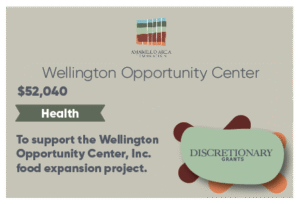
For 30 years, this organization has provided free after-school and summer enrichment programs for children of working families, serving dozens of students each year with educational activities, meals, and safe community spaces. From zoo visits and science programs to local outings and nutritious meals, their work helps children thrive beyond the classroom. Grant funds are used towards their food program, certified food service staff, and kitchen equipment. With support from community partners and future fundraising efforts, they continue expanding opportunities and food access for local youth.
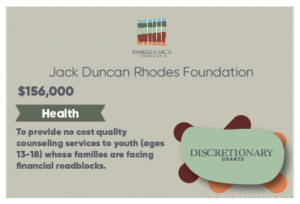
Jack’s Place Counseling Center in Amarillo is breaking down barriers to mental health care by providing no-cost counseling services for teens ages 13–18 whose families face financial hardship. In a region where access to affordable mental health care is limited, Jack’s Place offers timely, compassionate support to youth in need. With increased funding, the center hopes to expand beyond its current capacity and serve even more young people across the Texas Panhandle.
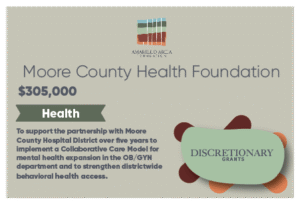
Moore County Hospital District is expanding access to mental health care across the Texas Panhandle through its innovative Collaborative Care Model program. In partnership with the Meadows Mental Health Policy Institute, MCHD is integrating behavioral health services directly into primary care, rural health, and now in OB/GYN care settings—helping rural residents, including pregnant and postpartum patients, access timely, affordable support close to home. Grant funds will also be used for expanding its behavioral health workforce, for public engagement, a Patient Assistance Fund, as well as support for a new large-scale rural health clinic that encompasses both behavioral health and general health care. With continued community partnerships and growing behavioral health resources, this program is creating a stronger, more connected future for mental health care in the Panhandle.

WDSLFP serves nearly 300 individuals each year by providing reliable access to nutritious food for families in need. As food shortages and rising costs continue to impact rural food pantries, WDSLFP has worked tirelessly to ensure clients still receive essential protein items like beef, chicken, and eggs during biweekly distributions. Supported by volunteers, local donors, churches, and community partnerships, this pantry remains committed to making sure no one in the community goes hungry.
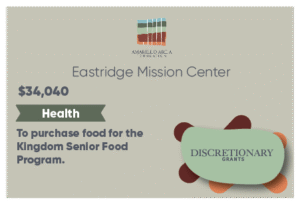
Eastridge Mission Center currently feeds about 50 seniors per weekday. EMC believes that their afternoon meal each weekday provides not only nourishment for those on the delivery route, but a chance for social interaction with the staff member or volunteer who brings the meal. The EMC has developed relationships with those on the delivery route, which helps their neighbors build a sense of dignity, self-worth, and community. Senior meal delivery in the Eastridge community is also meeting a critical need for safety and well-checks, as sometimes a volunteer will find a senior who has collapsed.
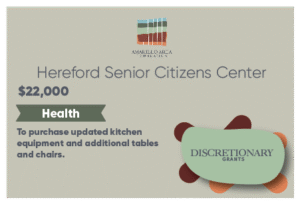
The Hereford Senior Citizens Association is a vital community hub serving daily congregate and home-delivered meals to local seniors while also providing wellness, recreation, and fellowship opportunities for the community. With the help of dedicated staff and volunteers, HSCA serves hundreds of meals each week—including their popular Fish-Fry Fridays. As demand grows and aging kitchen equipment needs replacement, community support continues to play an important role in helping HSCA provide quality meals and services for years to come.
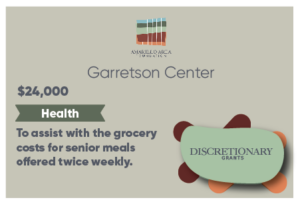
Since reopening in 2016, the Garretson Center in Panhandle has become a vital community hub serving seniors and families alike. The center provides home-delivered and congregate meals to local seniors, many at no cost, while also housing a Montessori school, community groups, and youth programs. Despite rising food costs and limited funding, Garretson continues to support food-insecure residents through community partnerships, donations, and grants—proving how small-town collaboration can make a lasting impact.

Building on the success of Phase I, this next phase of expansion will strengthen the organization’s ability to meet growing community needs through improved food storage, climate control, and operational efficiency. Upgrades including new refrigeration, shelving, HVAC improvements, and food distribution equipment will help reduce food loss, improve safety, and ensure more individuals and families have reliable access to food and support for years to come.
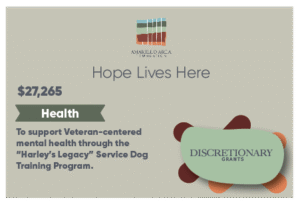
Hope Lives Here is expanding access to Veteran-centered mental health support across the Texas Panhandle through its Service Dog Training Program. By pairing disabled Veterans with trained service dogs, the program helps individuals experiencing PTSD, traumatic brain injury, military sexual trauma, and chronic pain build greater independence, emotional stability, and connection to their communities. This trauma-informed approach provides critical support for Texas Panhandle Veterans where traditional mental health services are often limited.
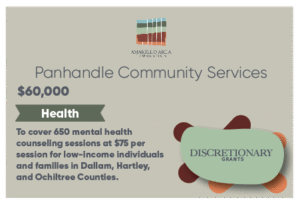
Panhandle Community Services is leading a community-driven effort to expand access to mental health care across rural Panhandle communities. Through partnerships and support from the Hogg Foundation for Mental Health, PCS is working to identify local mental health needs, reduce stigma, improve early intervention, and increase access to care—including telehealth services—for individuals and families in Ochiltree, Dallam, and Hartley Counties. This collaborative approach will help create lasting, community-centered mental health solutions for the future.

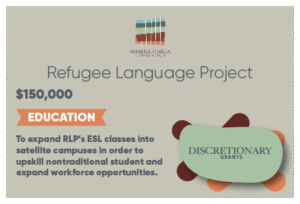
Refugee Language Project focuses on using Language as a door. A door to relationships, to community, to opportunity, to wellbeing, and to self-worth. By working to build relationships with Amarillo’s large refugee population and being responsive to their needs, RLP has built a brand that is trusted by those whom they serve as well as the community of churches, individuals, and other funders who support them. Refugee Language Project views language as infrastructure. While there is no guarantee that English language acquisition will secure economic mobility, there is no way to achieve economic mobility without it. This funding will allow RLP to expand the work they already do in upskilling non-traditional students through English language acquisition.
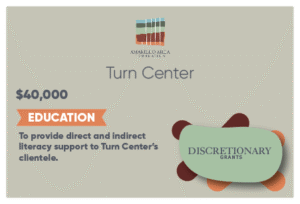
Studies show that more than 70% of children with identified developmental delays or disabilities read below grade level, placing this population at significant risk for long-term literacy challenges; therefore, Turn Center serves a uniquely high-risk group. Early intervention through outpatient occupational, physical, and speech therapy for children ages 0–5 helps close this gap by strengthening critical developmental foundations, including language, motor, sensory, attention, and self-regulation skills, that underly emergent literacy and school readiness. By intervening during this critical window, our services support children’s ability to access future reading instruction and academic learning.
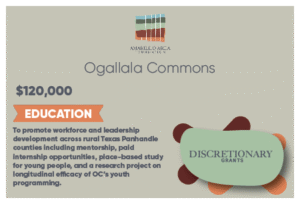
Ogallala Commons works with local community partners in rural areas of the Texas Panhandle to build asset-based connections between young people and the communities they call home. At the heart of all their youth work lies the idea of the “commonwealth” which centers on 12 key assets – youth learn to see their communities through the lens of strengths and assets rather than deficits. This results in a sense of place and belonging for young people, which is a powerful motivator to prevent the brain drain we typically see occurring in our rural communities. Through partnership across multiple sectors, OC works to build robust paid internships for youth, providing much needed access to work-based learning experiences in rural communities.
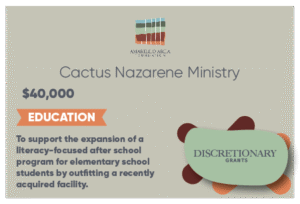
Cactus Nazarene Ministries is a multifaceted organization primarily focused on serving the refugee population of Cactus, TX. This community represents 32 nationalities across a population of only 1,300 people. Their services are responsive to the community and range from assistance with citizenship, English language acquisition, mentoring and academic assistance for youth, hosting a food pantry, and providing access to medical care for uninsured patients. This project will allow them to expand their literacy offerings during the summer – a critical time when refugee children lose much of their academic progress due to not practicing English outside of school.

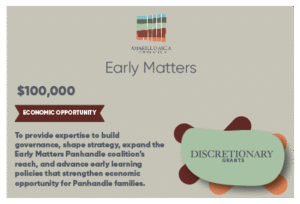
With only half of Texas students entering kindergarten ready to learn and only 49% meeting reading benchmarks by the end of third grade, Early Matters Texas (EMTX) views early childhood education as a critical lever for strengthening educational outcomes, workforce participation, and long-term economic stability. To improve these outcomes, EMTX supports a statewide network of regional coalitions composed of business, education, civic, nonprofit, and philanthropic leaders focused on strengthening systems that serve children from birth through age eight.